

Life with Braces
Food Restrictions
As a general rule, hard and sticky foods must be avoided while you are in treatment. Hard foods can easily break or damage wires and brackets, while sticky foods often get caught between brackets and wires and can be difficult to remove and also wash out the cement that allows the braces to stay on the teeth. Minimize sugary foods; they cause tooth decay and related problems.
Examples of Sticky Foods to Avoid:
- Gum (sugar-free or regular)
- Licorice
- Starburst
- Toffee
- Tootsie Rolls
- Caramels
- Taffy
Examples of Hard Foods to Avoid:
- Ice
- Nuts
- Apples (unless cut into small pieces)
- Raw carrots
- Bagels
- Chips
- Corn on the cob
- French bread crust/rolls
- Hard taco shells
- Pretzels
- Pizza crust
- Popcorn
- All hard candies (Jolly Ranchers, Lemon Heads, etc.)
Other Things to Stay Away from:
Do not chew on any hard objects. Many people break their brackets because they chew on things that are not food.
For example:
- Pen chewing
- Pencil chewing
- Nail biting
- Straw chewing
- Chewing on mouth guards
Something About Drinks! SODA— No more than ONCE A DAY!!!!!!!
Please drink all drinks with sugar in them through a straw. This helps keep the sugar off your brackets and away from your teeth. The acid from sugary drinks collects on the braces and can damage your teeth.
You will not be able to tear food with your front teeth without breaking brackets. You will need to cut the food into pieces and chew it with your back teeth.
If you do break a bracket, please keep the bracket and call our office as soon as possible so that we can allow for more time at your next appointment to repair your braces. Otherwise, we may not have time to repair your broken bracket and may need to reschedule your appointment for another day.
Parts of Braces
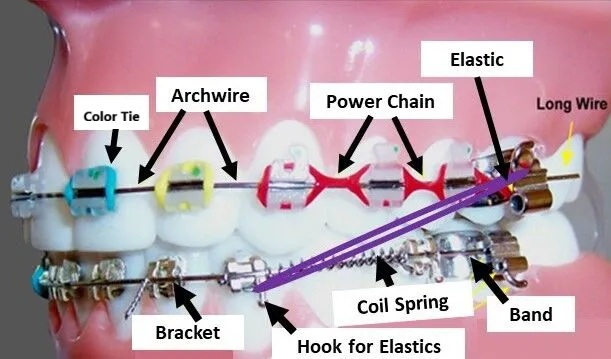
(Video link)
Brushing and Flossing
When you have braces or aligners, it's very important to brush and floss twice per day at minimum, in order to keep your teeth and gums healthy throughout your orthodontic treatment. If you need help choosing the right toothbrush, toothpaste, and dental floss, please ask us and we can help you choose the right products for your teeth and your appliance.
Brushing with Braces
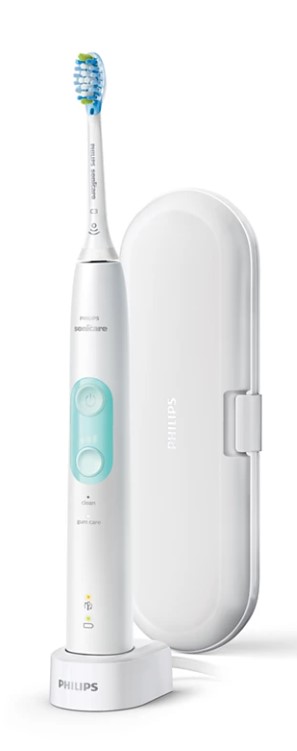
Brush your teeth for two minutes at least twice per day with a soft-bristled, small-headed toothbrush and fluoride toothpaste. As an alternative, you can use a powered toothbrush to increase your brushing effectiveness. Brush the outside and inside surfaces of your teeth using small, gentle, circular motions while positioning the head of the toothbrush at a 45-degree angle to the gum line. Brush your teeth’s chewing surfaces and the inside surface of your front teeth using short, gentle, back-and-forth motions. Pay close attention to the areas around your brackets or other cemented appliances.
Flossing with Braces
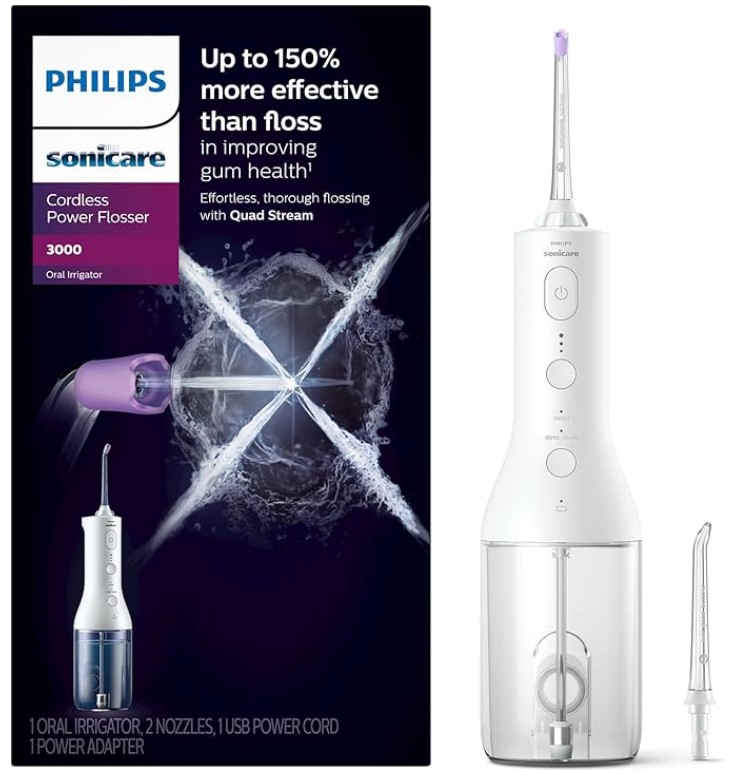
Flossing after every meal will help keep your teeth and braces clean, which will also help keep your treatment time on track. To floss with braces, use a floss threader or special orthodontic floss to thread the floss behind the wire and between the brackets. Wrap the ends of the floss around your pointer fingers of both hands, leaving a few inches of taut floss between them. Gently slide the floss between each set of teeth using a back and forth motion. Floss the sides of each tooth beneath the gum line to remove plaque and food particles. Repeat this process until you’ve flossed all of your teeth. If you find that your floss is not removing all of the food particles between your teeth and around your braces, ask us about a waterflosser!